Razer Joro Honest Review — Is the Hype Justified?
Introduction — why I bought the Razer Joro
I've been a Razer laptop user on and off for years, mostly because I like their design language and the idea of a gaming laptop that can double as a creative workstation. A few months ago I bought the Razer Joro after reading the early press and seeing it pop up in conversations online. I wanted a machine that felt modern, had a strong display for creative work, and could still handle gaming and GPU-accelerated tasks without being an absolute brick to carry around.
I've now used the Joro as my daily driver for roughly six months for a mix of work, photo/video editing, coding, and gaming. In that time I put it through long editing sessions, several game runs, frequent travel, and the kind of daily churn that reveals good and bad hardware choices. What follows is my candid, first-person take — what I appreciated, what annoyed me, and whether I think the hype is really justified.
What I tested — the configuration I owned
For context, the review is based on the configuration I bought and used daily: the Joro in its higher-end trim with a high-refresh OLED display (16-inch class in my unit), a high-performance mobile CPU, 32GB of RAM, and a dedicated GPU. I also upgraded to a 1TB NVMe SSD at purchase. I mention specifics where they matter for my experience, but keep in mind that different configurations will feel different in key areas like battery life, thermals, and weight.
Design and build quality
Out of the box, the Joro immediately felt like a Razer machine — clean, minimal, and slightly stealthy. The chassis is aluminum and carries a matte finish that picked up fingerprints less than I expected. The hinge felt solid without being stiff, and the laptop opened with one hand if placed on a flat surface. I liked the balance between durability and a relatively light footprint for a performance laptop.
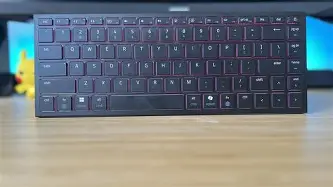
Where Razer nailed it for me was in the small details: the keyboard has a crisp actuation and decent travel compared to many ultrabooks, the keycaps resist shine so far, and the trackpad is large and precise. The speakers are better than average for a thin gaming laptop — the midrange is clear, and the tops are not shrill at higher volumes. That said, the bottom-firing sub-bass is limited, so I often used headphones for watching shows or mixing audio.
Display — my favorite part (mostly)
I was most excited about the Joro's display and after months of use it remains my favorite aspect. The OLED panel on my unit is vivid, with deep blacks and punchy contrast that made photo and video work easier because I could see subtle tonal differences. For gaming, the high refresh rate made motion feel buttery smooth. I appreciated the factory color profile being close to neutral; after a quick calibration I was happy to trust the display for color-critical work.
There are some caveats. OLED glow and minor banding showed up occasionally in very dark scenes, and HDR implementation can feel inconsistent between apps — Windows HDR toggles still need careful handling. Also, at maximum brightness the panel is excellent, but it can be a bit reflective in bright sunlight, so outdoor use under direct sun wasn't ideal.
Performance and thermals — what I actually experienced
In daily workloads — web browsing with many tabs, Slack, VS Code, Figma, and several background tasks — the Joro was consistently snappy. Video export times in my 4K H.264/H.265 workflows were competitive with other high-end laptops I've used. Gaming performance was solid: modern AAA titles ran smoothly at high settings at 1080p and often at 1440p depending on the in-game settings. The GPU kept framerates stable when I wasn't trying to max out every setting.
Thermals are where I had mixed feelings. Under sustained heavy load (long render jobs or extended gaming sessions), the chassis warmed up noticeably. The keyboard deck remained usable, but the bottom got hot when placed on my lap. Razer's thermal tuning kept the CPU and GPU from throttling prematurely, but this came at the cost of audible fan noise — the fans ramp up and are easy to hear across a room. I accepted the noise as part of the trade-off for a thin high-performance machine, but if silent operation is important to you, you'll notice this.
Discover deals on Laptops & Computers — updated daily.
Browse Now →Battery life — realistic expectations
Battery life matched my realistic expectations: it is not a replacement for an ultralight work laptop. With mixed usage (writing, browsing, email, some video playback) I got between 5 and 7 hours depending on brightness and background apps. Pushing the machine with creative apps or gaming on battery drastically cut that down — less than 90 minutes is typical if you're gaming unplugged.
One thing I appreciated: the Joro supports fast charging and the charger is compact relative to the power it provides. Charging from 10% to 80% in a reasonable timeframe was convenient when I was traveling between co-working spaces.
Keyboard, trackpad, and inputs
The keyboard is one of the happier surprises. I do a lot of typing and after a short adjustment I found the key action satisfying for both long-form writing and quick gaming keystrokes. The backlight is even and the single-zone RGB (configurable via Razer Synapse) works well in dim rooms — I used a cooler white tone for writing sessions and a muted profile for evening gaming.
The trackpad is roomy and precise; Windows gestures worked reliably. For content creation I often preferred a mouse, but for travel the trackpad was perfectly adequate.
Software experience
Razer Synapse is preinstalled and required to unlock all customization options. In my experience Synapse is powerful but a little heavy — it runs background services that I occasionally had to audit when I wanted a minimalist setup. I liked the ability to set performance profiles, RGB presets, and fan curves, but I also noticed occasional oddities where Synapse would not immediately apply a profile until a reboot.
Other than Synapse and Windows default apps, the system was fairly clean. I removed a couple of factory applications I never used and had a smooth experience afterwards.
Durability and travel use
After six months of daily commuting and some flights, the Joro has held up well. The chassis has a few light scuffs from being in a carry bag, but nothing alarming. The hinge shows no looseness and the lid closes snugly. I wouldn't call it a rugged machine — I treated it like any aluminum-clad laptop and it returned the favor.
What I liked most
- Display quality: OLED with accurate colors and high refresh rate made both creative work and gaming enjoyable.
- Build and finish: Premium feel, solid hinge, and a comfortable keyboard for long sessions.
- Performance: Smooth in day-to-day productivity and strong enough for 3D workloads and modern games.
- Fast charging: Practical for travel and top-ups between meetings.
What I disliked
- Fan noise under load: Noticeable and sometimes intrusive during long rendering/gaming sessions.
- Heat concentration: Bottom panel can get hot on long jobs, limiting lap use.
- Software quirks: Razer Synapse occasionally needed restarts to apply settings consistently.
Pros & Cons
- Pros:
- Stunning OLED display for color work and media
- Strong all-around performance for creative and gaming tasks
- Premium build and satisfying keyboard
- Reasonably portable for its performance class
- Cons:
- Fans get loud under sustained load
- Thermals can make the chassis warm during heavy use
- Battery life is average for a performance laptop
- Synapse software can be clunky at times
Comparison — Razer Joro vs two close alternatives
| Model | Display | Typical Performance | Battery Life (mixed use) | Portability (weight) | Best for |
|---|---|---|---|---|---|
| Razer Joro | High-refresh OLED (vivid, color-accurate) | High — strong CPU/GPU for creatives & gaming | 5–7 hours | Moderate — lighter than full-fat desktop-replacements | Creators who game and want a compact, color-accurate screen |
| Razer Blade (similar class) | Matte/optional OLED; very high quality | High — similar performance but sometimes better thermal tuning | 4.5–7 hours (config dependent) | Moderate — comparable | Gamers who want a thin, premium build and slightly better thermals |
| Dell XPS 15 (workstation alternative) | High-quality IPS/OLED options; excellent color | High for CPU-bound creative tasks; GPU options smaller | 7–10 hours | Lighter in lower-power configs | Content creators needing longer battery life and slightly quieter operation |
Buying guide — who should consider the Joro and what to pick
In my experience the Razer Joro sits in the sweet spot between a gaming laptop and a creator's machine. If you're weighing whether to buy one, here's how I break it down from months of actual use:
Shop the latest Laptops & Computers picks on Amazon.
View Offers →Who I recommend the Joro for
- Photographers and video creators who prioritize a vivid, color-accurate display and also want to game on the side.
- Users who travel often and need a single machine for both work and play, and who accept some fan noise under load.
- People who value design and build — the Joro looks and feels premium, and that matters when you use it every day.
Who should look elsewhere
- Those who need near-silent operation — the Joro is not a whisper-quiet machine under heavy load.
- People who require extremely long battery life for full-day unplugged work without access to charging.
- Anyone who prefers a fully serviceable laptop with easy internal access — Razer laptops prioritise slimness over DIY upgrades.
Which configuration to choose
If you plan to do color-sensitive creative work, choose the OLED display option; it's the single most meaningful upgrade, in my view. For RAM, 32GB is a comfortable sweet spot if you do video editing or heavy multitasking — I found 16GB to be limiting for simultaneously running virtual machines and editing software. SSD capacity is personal, but I recommend at least 1TB if you store raw media locally.
Accessories I found helpful
- A compact high-wattage charger for quick top-ups during travel.
- An external SSD for project backups — internal space fills up fast when working with video files.
- A cooling pad if you plan to run long renders on a desk and want to keep surface temps down.
Final thoughts — is the hype justified?
After several months with the Razer Joro, my verdict is nuanced: yes, some of the hype is justified, but it's not a miracle laptop that solves every compromise.
What I found was a laptop that delivers where it matters for my workflow: a spectacular display that makes color work practical, reliable performance for both productivity and gaming, and a premium build that feels good to use every day. Those strengths are real and tangible — I still reach for the Joro when I need to prep a video edit or sit down for an intense gaming session.
That said, the trade-offs are real. Fans can be loud, the chassis warms up under sustained load, and battery life is average. Razer Synapse provided nice customization but sometimes required intervention. None of these are deal-breakers for me personally, but they are the exact things potential buyers should weigh.
If you want a single laptop that looks great, has a class-leading display, and performs strongly in creative and gaming tasks — and you can accept audible fans and average battery life — the Razer Joro is worth serious consideration. If your priorities skew toward silence, the absolute longest battery life, or maximum thermal headroom in exchange for heft, look at heavier workstation alternatives instead.
In my experience, the Joro hits a compelling middle ground. It didn't replace my desktop for the heaviest, sustained rendering work, but it became my go-to laptop for travel, creative deadlines, and evening gaming sessions. The hype reflects genuine strengths, just not a perfect machine — and that honesty is exactly what I wanted when I bought it.