Om D E M10 Mark Iv Honest Review — Is the Hype Justified?
I've been using the Om D E M10 Mark Iv as my daily carry camera for the last several months. I bought it because I wanted a compact, lightweight system that still felt like a proper camera — not just a glorified point-and-shoot — and because I liked the Micro Four Thirds lens ecosystem. After shooting landscapes, portraits, street scenes, family events, and a handful of short travel videos, I have a pretty clear picture of what this camera can and can't do. In this review I'll walk through my hands-on experience, highlight what genuinely surprised me, and point out the annoyances that crept in after long-term use.
Introduction — why I picked the E-M10 Mark IV
I needed something smaller than my full-frame mirrorless kit but still capable of delivering pleasing JPEGs straight out of the camera and solid RAW files for editing. The E-M10 Mark IV looked like the sweet spot: a lightweight body, in-body stabilization, a broad selection of affordable lenses, and a feature set that promised good image quality without a steep learning curve. I already had a couple of Micro Four Thirds lenses in my bag, which made the decision easier.
What I found was a genuinely well-rounded travel and everyday camera. It isn't perfect, and there are clear trade-offs for the small body, but those trade-offs may be acceptable depending on how you shoot.
Design and ergonomics — what it's like to use every day
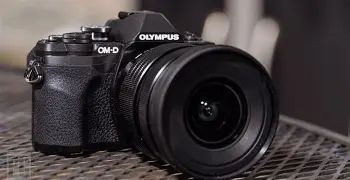
From day one I appreciated how the E-M10 Mark IV felt in my hands. It's compact and light enough that I stopped thinking about it as extra baggage. I used it for several weekend walks, a week-long trip, and everyday snapshots — the weight and size made it genuinely easy to carry all day. The grip is modest; if you have large hands you might wish it was a touch deeper, but the shape and texture give enough purchase for steady handling with smaller primes or the kit zoom.
The controls are intuitive and easy to reach. I liked that the top dials give me direct access to exposure modes without diving into menus. The touchscreen is responsive and has a selfie-friendly tilt that I actually used for low-angle compositions and quick vlogging. The electronic viewfinder (EVF) is pleasant enough for composition, though if you come from a higher-end mirrorless body you'll notice it's not the most detailed or snappy EVF on the market — still, it gets the job done in bright light and for regular shooting.
Image quality — JPEGs, RAW and real-world results
I shot mostly in RAW+JPEG while testing so I could compare straight-out-of-camera results with edited files. The 20MP Micro Four Thirds sensor delivers images that are punchy at base ISO and surprising in detail for the size of the sensor. In daylight and controlled lighting the JPEG colors were pleasing: skin tones looked natural, landscapes held good micro-contrast, and the in-camera processing did a nice job on sharpening and noise reduction without producing plasticky results.
In my experience, the RAW files respond well to editing. I pushed shadows and pulled back highlights on some high-contrast scenes and still retained a reasonable amount of recoverable detail. That said, at higher ISOs the limitations of the sensor do show. I noticed more luminance noise and softer fine detail above ISO 3200 compared with APS-C and full-frame cameras. For family photos in low light I often needed to boost exposure in post, and I preferred to pair the camera with brighter primes for available-light situations.
Autofocus and performance — what works and what doesn't
The autofocus is competent for most everyday shooting: street, portraits, landscapes, and casual family moments. It locks quickly in good light and tracked moving subjects well enough for slower-paced action. I found the face and eye detection to be reliable in typical conditions — it helped me get sharp portraits without fuss.
Shop the latest Electronics picks on Amazon.
Shop Amazon →However, when I tested the camera on more demanding subjects (fast-moving kids, busy sports, or erratic street action), it occasionally lagged or hunted a bit. It was not as aggressive as some recent hybrid AF systems on higher-end bodies or competitors tuned for sports. If you primarily shoot fast action, this camera may frustrate you; if your photography is more deliberate, it's unlikely to be a problem.
In-body stabilization (IBIS) — practical benefits
One of the features I relied on most was the in-body image stabilization. I used handheld shots at slower shutter speeds more than I expected to — capturing dusk cityscapes and dimly lit interiors without cranking ISO. The stabilization made a real difference in making those shots usable. I was able to shoot at shutter speeds I normally wouldn't trust handheld and still get sharp images for casual sharing and even some prints.
That said, IBIS doesn't work miracles. For extremely low light or very long focal lengths I still switched to a tripod or increased ISO. Stabilization helped a lot for travel and walkaround photography, and I noticed fewer blurred shots from handshake overall.
Video — solid but with caveats
I recorded several short videos — family moments, city clips, and a few simple vlogs. The camera offers 4K recording, and the footage looks clean and detailed for social media and casual projects. I appreciated the image stabilization when walking and shooting handheld; it results in smoother clips than an unstabilized body would.
What I noticed was that autofocus during video could be a bit jumpy in tricky light or when the subject moved erratically. If you're shooting more cinematic or professional video, you'll likely notice rolling shutter and the AF behavior. For quick clips, family videos, and travel recordings the E-M10 Mark IV is perfectly usable.
Battery life and day-to-day reliability
Battery life is reasonable but not outstanding. On a normal day of shooting (a mix of stills and short video clips), I averaged through a single battery by the evening. For longer outings I kept a spare in my bag. If you expect to go a full day of heavy shooting without recharging, plan on packing an extra battery. I appreciated that charging via USB made topping up easy during travel, though the camera isn't the fastest to charge from empty.
Lenses and system flexibility
One of the most enjoyable parts of using this camera was the lens ecosystem. Micro Four Thirds lenses are plentiful and many are compact and affordable. I used the small kit zoom for everyday shots and paired it with a fast prime for portraits and low-light work. The smaller lenses are a big part of why the system stays compact and friendly for travel. If you already own MFT lenses, the E-M10 Mark IV integrates into that collection flawlessly.
Find top-rated Electronics products at great prices.
Shop Amazon →What I noticed is that to get the best from the camera in low light you want a fast lens. The body is capable, but pairing it with a bright prime significantly improves low-light AF speed, background separation, and overall image quality.
What I appreciated most
- Small, pocketable body that I actually carried most days.
- Excellent JPEG color straight from the camera for social sharing without heavy editing.
- IBIS that meaningfully reduced handshake and expanded handheld shooting possibilities.
- Responsive touchscreen and friendly controls for beginners and hobbyists.
- Access to a large Micro Four Thirds lens selection.
What bothered me
- Autofocus can struggle with fast, unpredictable action compared with higher-end systems.
- Battery life is fine for casual days but I needed a spare for longer shoots.
- EVF and rear screen, while usable, aren't as crisp as some competitors in the same price band.
- Video autofocus and rolling shutter limitations if you plan more serious video work.
Pros & Cons
- Pros:
- Very compact and lightweight — genuinely portable.
- Pleasing JPEG colors and good in-camera processing for travel shots.
- Effective in-body stabilization for handheld low-light work.
- Friendly controls and touchscreen make it easy to learn and use.
- Large and mature Micro Four Thirds lens ecosystem.
- Cons:
- Autofocus is solid for stills but not ideal for high-speed action.
- Battery life requires planning for longer days.
- EVF and display resolution aren't class-leading.
- 4K video is usable but limited compared with video-first cameras.
Quick comparison — E-M10 Mark IV vs Mark III vs a competitor
| Model | Who it's for | Strengths | Weaknesses |
|---|---|---|---|
| Om D E M10 Mark IV | Travel photographers, hobbyists, first-time interchangeable-lens buyers | Compact body, good JPEGs, in-body stabilization, broad lens choice | Autofocus not ideal for fast action; average battery life |
| Om D E M10 Mark III | Users on a tighter budget who want a compact MFT body | Smaller price, similar handling, good image quality for stills | Fewer modern features and slightly older AF and video performance |
| Alternative (e.g., compact APS-C mirrorless) | Photographers wanting better high-ISO performance and AF | Generally better low-light image quality and faster AF systems | Larger body and lenses, heavier to carry day-to-day |
Buying guide — is this the right camera for you?
After using the camera for months, I've developed a simple checklist I use when recommending the E-M10 Mark IV to friends and readers. Answer these questions honestly and you'll know whether it's a good match for your needs.
Who should buy it
- Buy it if you want a compact, capable camera for travel and everyday photography. I found it perfect for weekend trips and family outings.
- Buy it if you like shooting JPEGs and want good straight-out-of-camera color without heavy post-processing.
- Buy it if you already own Micro Four Thirds lenses — the body integrates seamlessly with the system.
Who should look elsewhere
- If you mainly shoot sports or fast-paced action, consider a camera with a more aggressive AF tracking system.
- If you need top-tier low-light performance for large prints or night events, APS-C or full-frame alternatives will yield cleaner results at high ISO.
- If professional-grade video is your priority, a video-centric mirrorless camera will better suit that workflow.
What to pair it with
- Start with a small, fast prime if low-light or portraits are a priority — it made the biggest perceived upgrade for me.
- If travel is your use case, a compact zoom plus a pancake prime kept my kit light while covering most focal lengths.
- Bring a spare battery for long days and a small tripod if you plan intentional low-light or long-exposure shots.
Buying tips
- Try to hold the camera in a store to see how it fits your hand — the small grip can feel cramped for larger hands.
- Test autofocus on the kind of subjects you shoot most. For portraits and street work it should be fine; for action, try some live tests.
- If you don't need the latest sensor tweaks and want to save money, consider earlier Mark models which can still be very capable for many uses.
Final thoughts — is the hype justified?
After several months with the Om D E M10 Mark IV, I can say the hype around it is mostly justified — for a large segment of photographers. In my experience it delivers a compelling balance of image quality, portability, and usable features. I loved carrying it because it didn't feel like a burden, and I appreciated how often I reached for it instead of my phone. The image stabilization and pleasing JPEGs made everyday shooting more rewarding, and the lens ecosystem gives you real flexibility to grow or specialize.
That said, the camera isn't a magic bullet. I was disappointed when the autofocus struggled with very fast-moving subjects, and I had to manage the battery when I was out all day. The EVF and video capabilities are adequate but not class-leading. If your priorities are action sports, very low-light work, or professional video, there are better-suited cameras. But if you want a friendly, portable system that produces beautiful everyday images and doesn't demand a steep learning curve, the E-M10 Mark IV is a very sensible choice.
In my experience, it rewards thoughtful use more than it promises technical perfection. For the type of photography I do most — travel, family, portraits, and street scenes — it has been a consistently enjoyable companion and definitely earned its place in my bag.