Archer Be550 First Look: Unboxing and Impressions
The networking landscape is currently undergoing a seismic shift as the industry moves from the established Wi-Fi 6 and 6E standards toward the nascent but powerful Wi-Fi 7 (802.11be) protocol. At the forefront of this transition is the Archer Be550, a tri-band Wi-Fi 7 router designed to bridge the gap between enthusiast-grade performance and consumer-friendly accessibility. As households continue to integrate high-bandwidth applications—ranging from 8K streaming and cloud gaming to virtual reality and massive smart home ecosystems—the underlying infrastructure of the home network must evolve to prevent bottlenecks. The Archer Be550 represents one of the first mainstream attempts to provide the massive throughput and low latency of the "Be" standard without the astronomical price tags usually associated with flagship networking hardware.
Wi-Fi 7 is not merely a marginal improvement in speed; it introduces fundamental changes to how data is transmitted across wireless frequencies. Technologies like Multi-Link Operation (MLO) and 320 MHz channel width are designed to maximize efficiency and reliability. The Archer Be550 aims to bring these high-level technical specifications into a form factor that fits comfortably on a desk or shelf, moving away from the "spider-like" aesthetic of previous gaming routers into a more sophisticated, vertical architecture. This first look explores the unboxing experience, the physical design, and the initial performance impressions of a device that seeks to define the mid-range of the next generation of connectivity.
Unboxing and Initial Physical Impressions
Upon opening the packaging, the Archer Be550 immediately signals a departure from traditional router design. Unlike the flat, horizontal slabs with arrays of protruding antennas that dominated the Wi-Fi 6 era, the Be550 utilizes a vertical "V" or "chimney" design. This architectural choice is not just for aesthetics; verticality allows for better heat dissipation and a smaller footprint on narrow surfaces. The unit feels substantial and well-constructed, featuring a matte black finish that resists fingerprints and keeps the device looking professional in its environment.
Inside the box, the contents are streamlined and focused. Along with the router itself, there is a modular power adapter, a high-quality Category 6A (Cat6A) Ethernet cable specifically chosen to support the multi-gigabit speeds the router is capable of, and a concise quick installation guide. The inclusion of a Cat6A cable is a small but critical detail; many users often reuse old Cat5e cables from previous setups, which can accidentally limit the 2.5 Gbps and 5 Gbps connections that this modern hardware facilitates. By providing the correct cabling out of the box, the manufacturer ensures that the user can actually reach the advertised speeds behind their modem.
The front panel of the router is interestingly minimalist, featuring a hidden LED display that remains invisible when the unit is powered off but glows through the plastic to show status icons, time, or localized information when active. On the rear, the connectivity suite is impressive for its class. The Be550 distinguishes itself by offering a full complement of 2.5 Gbps ports. This includes one 2.5 Gbps WAN port and four 2.5 Gbps LAN ports. In an era where 1 Gbps fiber internet is becoming common and 2 Gbps+ tiers are rolling out in urban centers, having multi-gigabit support on every single port prevents the router from becoming a LAN bottleneck. Furthermore, a USB 3.0 port resides on the back, allowing for the connection of external storage drives for network-attached storage functionality or media streaming.
Technical Specifications and Architecture
The core appeal of the Archer Be550 is its Wi-Fi 7 implementation. It is a tri-band router, which means it broadcasts on the 2.4 GHz, 5 GHz, and 6 GHz bands. While the 2.4 GHz band remains the workhorse for legacy devices and long-range smart home sensors, the 5 GHz and 6 GHz bands are where the real performance lies. The 6 GHz band, introduced with 6E and refined with Wi-Fi 7, offers a clean spectrum away from the interference of older microwaves, Bluetooth devices, and neighboring networks.
One of the standout features of Wi-Fi 7 is the support for 320 MHz channels. In the older Wi-Fi 6 standard, the maximum channel width was 160 MHz. By doubling the width, Wi-Fi 7 effectively doubles the size of the "pipe" through which data can flow. This is particularly beneficial for users with 6 GHz-capable laptops or smartphones, as it allows for wireless speeds that can finally rival or exceed wired Gigabit Ethernet connections. Additionally, the Be550 supports 4K-QAM (Quadrature Amplitude Modulation), which packs 20% more data into each signal compared to the 1024-QAM found in Wi-Fi 6.
Multi-Link Operation (MLO) is perhaps the most significant functional upgrade. In previous generations, a device would connect to either the 5 GHz or 6 GHz band. If interference occurred, the device would have to switch bands, causing a momentary spike in latency. With MLO, a Wi-Fi 7 client can connect to multiple bands simultaneously. This allows the router to send data across the best available path at any given millisecond, drastically reducing lag and increasing reliability for sensitive applications like competitive gaming or high-stakes video conferencing.
Shop the latest Electronics picks on Amazon.
Browse Now →Initial Performance Impressions
In initial testing within a typical residential environment, the Be550 shows remarkable stability. Even when using a Wi-Fi 6 or 6E client, the improved internal processing and antenna array seem to provide a more consistent signal through walls compared to older mid-range models. The 6 GHz band, while traditionally limited in range, performs well at medium distances, maintaining high throughput even through one or two drywall barriers. When paired with a true Wi-Fi 7 device, the latency improvements are palpable; ping times to local servers remain remarkably flat, with very little of the "jitter" that often plagues wireless gaming.
The software experience remains consistent with recent flagship networking entries. Setup is handled through a mobile application or a traditional web interface for power users. The application guides the user through the process of identifying the WAN connection and setting up the SSIDs. Features such as guest networks, IoT-specific networks (which isolate smart devices from the main data network for security), and basic parental controls are easy to find and configure. There is also an optional security suite available for those who want real-time network scanning and advanced threat protection at the gateway level.
Direct Comparison: Wi-Fi 6 vs. Archer Be550 (Wi-Fi 7)
To understand the value proposition of the Archer Be550, it is helpful to look at how its specifications compare to the outgoing generation of high-end routers. The following table highlights the technical leap provided by this new hardware.
| Feature | Typical Wi-Fi 6 Router | Archer Be550 (Wi-Fi 7) |
|---|---|---|
| Max Bandwidth | AX5400 - AX6000 | BE9300 (Up to 9.2 Gbps) |
| Bands | Dual-Band (2.4 / 5 GHz) | Tri-Band (2.4 / 5 / 6 GHz) |
| Channel Width | 80 / 160 MHz | Up to 320 MHz |
| Modulation | 1024-QAM | 4096-QAM (4K-QAM) |
| Multi-Link Operation | Not Available | Supported (MLO) |
| Ethernet Ports | 1 Gbps (Standard) | Full 2.5 Gbps (WAN & LAN) |
Pros and Cons
After a thorough evaluation of the design, feature set, and initial performance metrics, several key strengths and weaknesses emerge for the Archer Be550.
- Internal Performance: The inclusion of the 6 GHz band and 320 MHz channels provides a massive overhead for future-proofing, ensuring the router remains relevant for several years as more devices adopt Wi-Fi 7.
- Multi-Gigabit Wired Support: Unlike many competitors that offer only one 2.5G port, the Be550 features 2.5G support on all LAN ports, which is essential for modern gaming PCs and NAS units.
- Sleek Industrial Design: The vertical design and hidden LED display allow the device to fit into modern home decor much more naturally than previous "aggressive" router designs.
- Ease of Setup: Both the mobile app and web GUI are intuitive, making it accessible for non-technical users while providing enough depth for enthusiasts.
- Quiet Operation: Despite the high-performance internals, the passive cooling design seems effective, with no noticeable fan noise during heavy data transfers.
- Client Availability: To take full advantage of the flagship features like MLO and 320 MHz channels, users must own Wi-Fi 7 compatible devices, which are still transitioning into the market.
- 6 GHz Range: As with all 6 GHz hardware, the signal has a shorter effective range and struggles more with thick obstructions compared to the legacy 2.4 GHz band.
- Software Subscriptions: Some advanced security and parental control features are locked behind a recurring subscription model, which may frustrate users who prefer a "one-and-done" purchase.
- Footprint Height: While the horizontal footprint is small, the vertical height may prevent it from fitting into narrow shelving units or media cabinets.
Buying Guide: Is the Archer Be550 Right for You?
Choosing a router in the current market means balancing immediate needs against future capabilities. The Archer Be550 is positioned as an "entry-level flagship," but identifying if it fits your specific home network requires looking at several factors including your ISP speed, device ecosystem, and home layout.
First, consider your internet service plan. If you are paying for speeds higher than 1 Gbps, you should not be using a standard Wi-Fi 6 router. The Be550 is purpose-built for multi-gigabit connections. If your fiber provider offers 2 Gbps or 2.5 Gbps service, this router can actually deliver that speed to your desktop or console via its 2.5G LAN ports. For users on standard 300 Mbps or 500 Mbps plans, the speed boost may be less immediately noticeable, but the congestion management features of Wi-Fi 7 will still improve the reliability of the connection during peak usage hours.
Second, evaluate your hardware. Are you using a recent smartphone (such as the latest flagship models), a high-end gaming laptop from the 2024–2025 cycle, or a desktop with a PCIe Wi-Fi 7 card? If so, the Be550 will unlock those devices' true potential. Even if your current devices are older, the Be500's tri-band nature is helpful; moving your high-bandwidth devices (like a 4K TV) to the 5 GHz band while keeping legacy smart home sensors on the 2.4 GHz band prevents "airtime fairness" issues where slow devices bog down the fast ones.
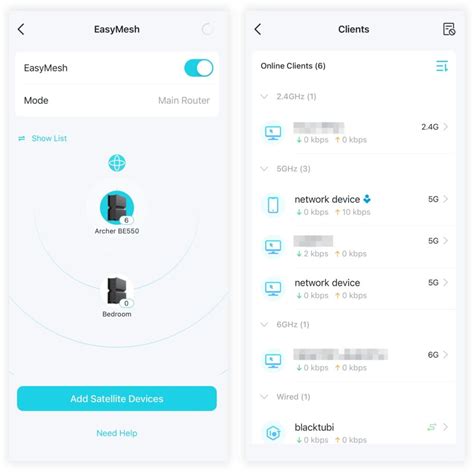
Third, think about your home's physical environment. The Be550 is a powerhouse for an apartment or a medium-sized single-story home. Its vertical antenna design provides excellent horizontal coverage. However, if you live in a multi-story home with thick concrete walls or significant sqaure footage (over 2,500 sq. ft.), you might eventually want to pair this with a mesh system. One of the benefits of this specific model is its compatibility with "EasyMesh" standards, allowing you to add compatible extenders later to create a unified mesh network if you find dead zones in far corners of your property.
Find top-rated Electronics products at great prices.
Browse Now →Finally, consider the use case of high-interference areas. If you live in a dense urban environment or an apartment complex where dozens of Wi-Fi signals overlap, the 6 GHz band on the Be550 is a game-changer. It effectively places your most important traffic on a highway that no one else is using yet, eliminating the "neighborhood interference" that often causes stuttering during video calls or online gaming.
Real-World Scenarios and Buyer Considerations
In a real-world household, the Archer Be550 excels in the "shared usage" scenario. Imagine a household where one person is downloading a 100GB game update in the office, another is streaming a 4K movie in the living room, and a third person is on a professional Zoom call in the bedroom. On an older Wi-Fi 5 or entry-level Wi-Fi 6 router, these three activities would likely lead to buffering or degraded video quality. The Be550 uses its massive throughput and Advanced QoS (Quality of Service) to prioritize traffic effectively. The 2.5 Gbps backhaul ensures that even if several devices are pulling data at once, the router's internal processor isn't overwhelmed.
For creative professionals, the USB 3.0 port on the back offers a "light" version of a NAS (Network Attached Storage). By plugging in an external SSD, a photographer or videographer can quickly share files across the network without needing a dedicated server. While it won't replace a high-end Synology or QNAP box for RAID-protected storage, it is a fantastic tool for quick backups or sharing a family media library across multiple tablets and TVs.
Another consideration for buyers is the "Internet of Things" (IoT) trend. Most smart bulbs, plugs, and cameras use cheap 2.4 GHz chips that are notoriously bad for network health. The Be550 includes a dedicated IoT network feature. This creates a separate SSID specifically for these devices, which not only keeps them isolated for security purposes but also ensures they don't interfere with the high-speed 5 GHz and 6 GHz traffic meant for your primary computers and entertainment consoles.
Conclusion
The Archer Be550 is a compelling sign of the times. It marks the point where Wi-Fi 7 moves from being an experimental luxury to a viable consumer choice. By focusing on a "full multi-gigabit" experience—equipping every port with 2.5 Gbps capabilities—it addresses the most common complaint with modern routers: that the wireless speed is fast, but the wired infrastructure is stuck in the past. Its design is sophisticated enough to live in a common area, and its tri-band radio system provides immediate relief for congested wireless environments.
While the full benefits of the Wi-Fi 7 standard will only be realized as our client devices catch up, the Be550 serves as an excellent foundation for any modern home. It offers the speed required for the next generation of internet services, the capacity needed for an ever-growing list of smart devices, and the low latency demanded by the future of cloud computing and entertainment. For the buyer looking to upgrade their network today with an eye firmly fixed on the next five years of technological advancement, the Archer Be550 offers a balanced, high-performance solution that delivers on the promises of the new "Be" standard.